



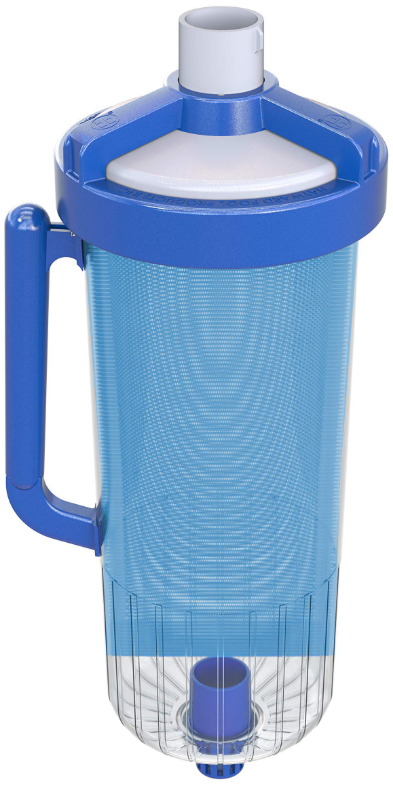
Hayward W530 AND W560 Leaf Canister
Safety Instructions
- Spa or hot tub water temperatures should never exceed 104°F [40°C]. A temperature of 100°F [38°C] is considered safe for a healthy adult. Special caution is suggested for young children. Prolonged immersion in hot water can induce hyperthermia.
- Drinking alcoholic beverages before or during spa or hot tub use can cause drowsiness, which could lead to unconsciousness and subsequently result in drowning.
- Pregnant women beware! Soaking in water above 100°F [38°C] can cause fetal damage during the
first three months of pregnancy (resulting in the birth of a brain-damaged or deformed child). Pregnant women should adhere to the 100°F [38°C] maximum rule. - Before entering the spa or hot tub, users should check the water temperature with an accurate thermometer; spa or hot tub thermostats may err in regulating water temperatures by as much as 4°F (2.2°C).
- Persons taking medications, induce drowsiness, such as tranquilizers, antihistamines, or anticoagulants, should not use spas or hot tubs.
- If the pool/spa is used for therapy, it should be done with the advice of a physician. Always stir pool/ spa water before entering the pool/spa to mix in any hot surface layer of water that might exceed healthful temperature limits and cause injury. Do not tamper with controls, because scalding can result if safety controls are not in proper working order.
- Persons with a medical history of heart disease, circulatory problems, diabetes or high blood pressure
problems should obtain a physician’s advice before using spas or hot tubs. - Hyperthermia occurs when the internal temperature of the body reaches a level several degrees above the normal body temperature of 98.6°F [37°C]. The symptoms of Hyperthermia include: drowsiness, lethargy, dizziness, fainting, and an increase in the internal temperature of the body.
The effects of Hyperthermia include
- Unawareness of impending danger.
- Failure to perceive heat.
- Failure to recognize the need to leave the spa.
- Physical inability to exit the spa.
- Fetal damage in pregnant women.
- Unconsciousness resulting in danger of drowning.
Installation
With an Automatic Pool Vacuum Cleaner
- Turn off the filter pump.
- Disassemble the 1 ½” cleaner hose between Hayward W530 AND W560 Leaf Canister the first and second sections, counting from the pool wall.
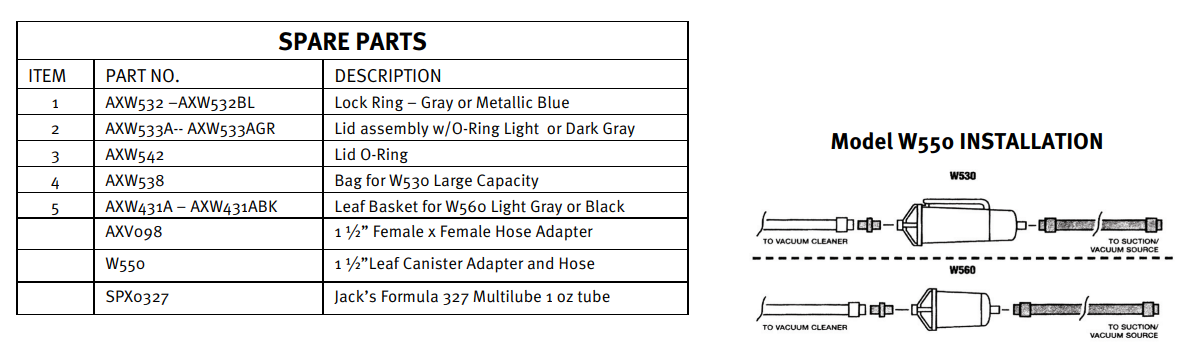
- Connect the male end of the second section of hose to the top of the canister. Submerge the canister to remove the trapped air. Connect the female end of the first section of hose to the bottom of the canister. Make sure the first section of the hose is connected to the vacuum line or skimmer.
- Turn on the filter pump and submerge the cleaner to remove remaining air from the system.
With a Manual Vacuum Cleaner
- The W550, LEAF CANISTER ADAPTER KIT 1.5, is needed to adapt the single-piece hose used to manually vacuum to a Skim-Vac used in a skimmer.
- Detach the cleaner hose from the Skim Vac.
- Attach the 40” long hose to the Skim-Vac. Install the bottom of the Leaf Canister into the 40” hose.
- Install the Adapter between the female end of the Manual hose and the Female end of the top of the Leaf Canister.
Cleaning
- To empty the canister, turn off the filter pump.
- Disconnect the hose between the cleaner and the canister at the top of the canister.
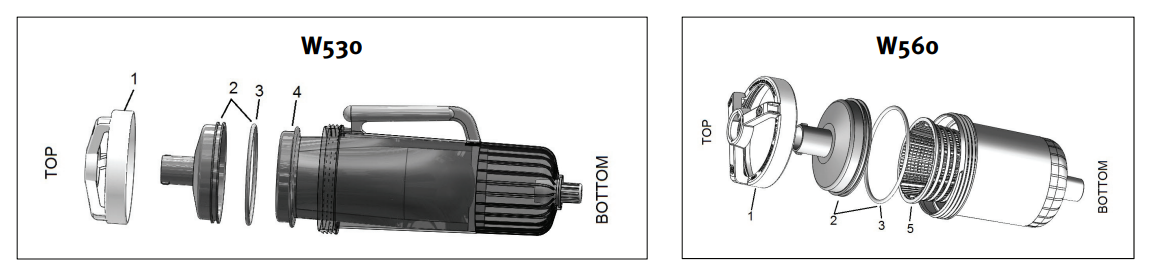
- Unscrew the lock ring by turning counterclockwise as you look down from the top. This should lift off the lid.
- Rinse the bag and the canister.
- Install the bag in the canister, lubricate the lid O-ring with a non-petroleum-based lubricant, and install the lid.
- Lubricate the thread and install the lock ring by rotating clockwise. Do not over-torque the lock ring.
- Reconnect the hose, and fill the system with water.
Customer Service
- Ph: 1-800-657-2287
- Website: www.haywardcommercialpool.com
FAQs
What is the purpose of the Hayward W530 and W560 leaf canisters?
By catching leaves, dirt, and other large particles before they get to your pool pump and filter, these leaf canisters assist keep your equipment from clogging and prolong its lifespan.
What is the difference between the W530 and W560 models?
The canister’s size and volume are the main areas of variance. Whereas the W530 is more compact for smaller pools or lighter debris loads, the W560 usually holds more material and is appropriate for larger pools or locations with a lot of leaf fall.
How often should I clean the leaf canister?
To preserve the best possible water flow and safeguard your pump, clean the canister basket once a week or more often during periods of high debris.
Can I use the pool while cleaning the leaf canister?
No, in order to prevent accidents or damage to the equipment, always turn off the pool pump before opening the leaf canister.
Can I use chemicals inside the leaf canister?
No, chemicals ought to be added straight to the water in the pool. Chemicals used inside the canister have the potential to harm the basket and other parts.
What should I do if the canister leaks?
Examine the gasket or O-ring surrounding the lid for any fractures or dirt. Use silicone grease to clean and lubricate the O-ring, or replace it if it’s damaged.
Can the leaf canister be used with saltwater pools?
Indeed. Both freshwater and saltwater pools can use the W530 and W560 versions, however regular maintenance is necessary to avoid corrosion.