

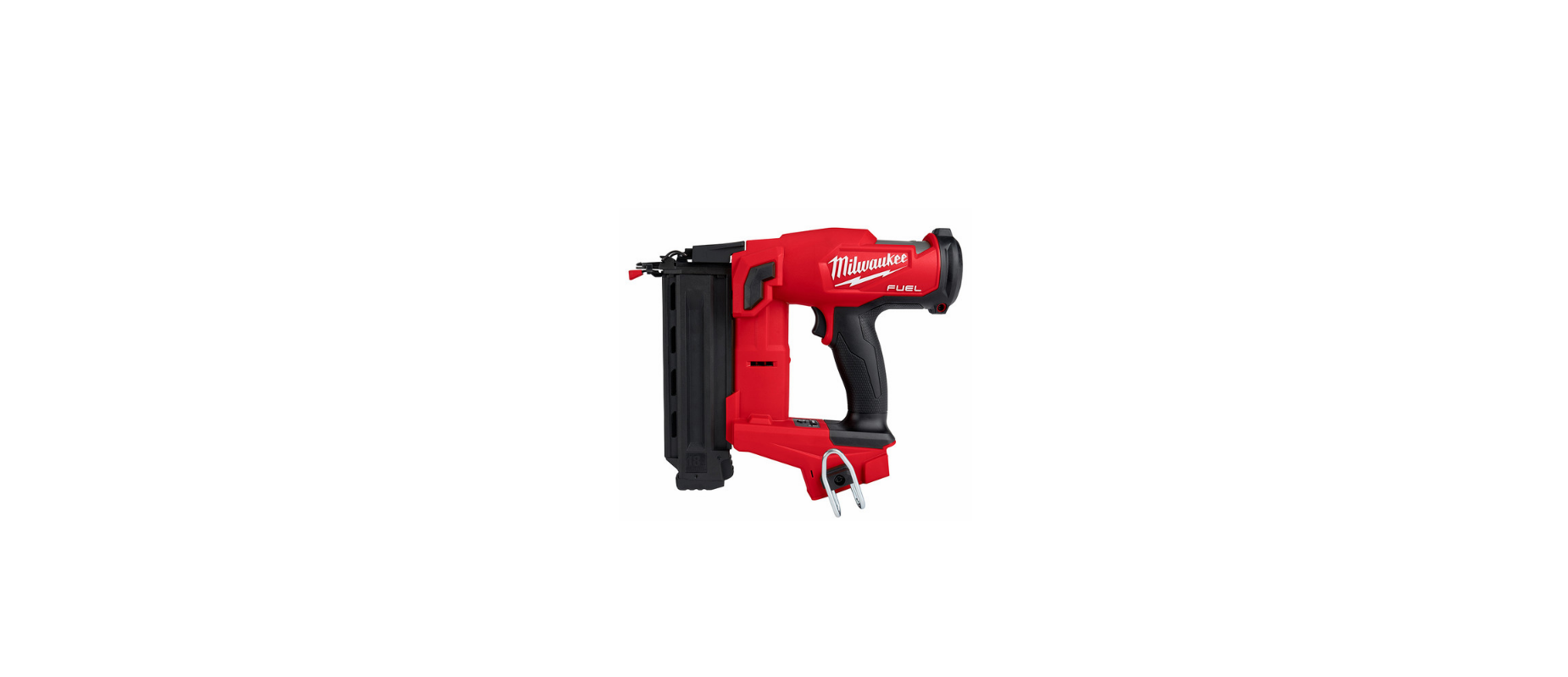

Milwaukee M18 FUEL Coil Roofing Nailer
Safety Instructions
- Keep the work area clean and well-lit. Cluttered or dark areas invite accidents.
- Keep children and bystanders away while operating a power tool.
- Distractions can cause you to lose control.
- Power tool plugs must match the outlet. Never modify the plug in any way.
- Do not use any adapter plugs with earthed (grounded) power tools.
- Unmodified plugs and matching outlets will reduce the risk of electric shock.
- Do not expose power tools to rain or wet conditions.
- Water entering a power tool will increase the risk of electric shock.
- Do not abuse the cord. Never use the cord for carrying, pulling, or unplugging the power tool.
- Keep the cord away from heat, oil, sharp edges, or moving parts.
- Damaged or entangled cords increase the risk of electric shock.
- When operating a power tool outdoors, use an extension cord suitable for outdoor use.
- Use of a cord suitable for outdoor use reduces the risk of electric shock.
- Stay alert, watch what you are doing, and use common sense when operating a power tool.
- Do not use a power tool while you are tired or under the influence of drugs, alcohol, or medication.
- A moment of inattention while operating power tools may result in serious personal injury.
- Use personal protective equipment. Always wear eye protection.
- Remove any adjusting key or wrench before turning the power tool on.
- A wrench or a key left attached to a rotating part of the power tool may result in personal injury.
- Do not overreach. Keep proper footing and balance at all times.
- This enables better control of the power tool in unexpected situations.
- Dress properly. Do not wear loose clothing or jewelry.
- The use of dust collection can reduce dust-related hazards.
- A careless action can cause severe injury within a fraction of a second.
Use & Care
- Do not force the power tool. Use the correct power tool for your application.
- The correct power tool will do the job better and safer at the rate for which it was designed.
- Do not use the power tool if the switch does not turn it on and off.
- Any power tool that cannot be controlled with the switch is dangerous and must be repaired.
- Disconnect the plug from the power source and/ or remove the battery pack, if detachable, from the power tool before making any adjustments, changing accessories, or storing power tools.
- Such preventive safety measures reduce the risk of starting the power tool.
- Maintain power tools and accessories. If damaged, have the power tool repaired before use.
- Many accidents are caused by poorly maintained power tools.
- Keep handles and grasping surfaces dry, clean, and free from oil and grease.
Battery
- A charger that is suitable for one type of battery pack may create a risk of fire when used with another battery pack.
- Recharge only with the charger specified by the manufacturer.
- Use power tools only with specifically designated battery packs.
- Use of any other battery packs may create a risk of injury and fire.
- Under abusive conditions, liquid may be ejected from the battery; avoid contact.
- If contact accidentally occurs, flush with water.
- If liquid contacts the eyes, additionally seek medical help.
- Liquid ejected from the battery may cause irritation or burns.
- Do not use a battery pack or tool that is damaged or modified.
- Damaged batteries may exhibit unpredictable behavior, resulting in fire, explosion, or risk of injury.
- Do not expose a battery pack or tool to fire or excessive temperature.
- Exposure to fire or temperature above 265°F (130°C) may cause an explosion.
- Follow all charging instructions and do not charge the battery pack or tool outside the temperature range specified in the instructions.
- Charging improperly or at temperatures outside the specified range may damage the battery and increase the risk of fire.
Specifications
- Cat. No……………………………………………… 2909-20
- Volts…………………………………………………….. 18 DC
- Battery Type ………………………………………….M18™
- Charger Type…………………………………………M18™
- Collation Angle ………………………………………….. 15°
- Fastener Size (Diameter) ……………………….. 0.120″
- Fastener Length ………………………………0.75″-1.75″
- Recommended Ambient Operating Temperature ………………. 0°F to 125°F
- Replacement Vinyl Siding Tip……………………………. Cat. No. 48-08-2909
- Replacement Wear Pads………………………………….. Cat. No. 48-09-2909
Description
- Workpiece contact bracket
- Depth adjustment
- Removable wear pads (6)
- Trigger
- Handle
- Control panel
- Belt/Scaffolding hook
- Magazine door
- Magazine
- Vinyl siding tip storage (not shown)
- Magazine door closure point
- Magazine door latch
- Vinyl siding tip
- Nail length setting indicator
- Nail length selector plate
- Nail length selector post
- Striker
Assembly
- Recharge only with the charger specified for the battery.
- For specific charging instructions, read the operator’s manual supplied with your charger and battery.
Removing/Inserting the Battery
- To remove the battery, push in the release buttons and pull the battery pack away from the tool.
- Always remove the battery pack anytime the tool is not in use.
- To insert the battery, slide the pack into the body of the tool. Make sure it latches securely into place.
- Only use accessories specifically recommended for this tool. Others may be hazardous.
Installing/Removing Fastener Coils
- Always remove the battery pack before changing or removing fasteners. Always wear safety goggles or glasses with side shields.
Installing the Fastener Coils
- Lay the tool on its side.
- Open the magazine door by squeezing the magazine door latch and lifting it.
- Position the nail length selector plate to the correct nail length of the coil you are using.
- Use the nail length setting indicator.
- Place the center of the fastener coil over the post with the loose end over the top of the coil.
- The tips of the fasteners must rest on the plate.
- Pull the loose end of the coil toward the nose of the tool. Lay the first fastener into the slot.
- Close the magazine door by pressing down on the magazine door closure point to prevent damage to the rest of the magazine cover.

Removing the Fastener Coils
- Lay the tool on its side.
- Open the magazine door by squeezing the magazine door latch and lifting it.
- Lift the loose end of the fastener coil out of the magazine.
- Slide the coil off the nail length selector post and set the coil aside.
- Close the magazine door by pressing down on the magazine door closure point to prevent damage to the rest of the magazine cover.
Attaching Vinyl Siding
The vinyl siding tip is stored in a designated compartment on the back of the tool. It can be installed on the workpiece contact bracket of the tool and helps to align the nail by sitting within the slot on a piece of siding. Use only the MILWAUKEE replacement vinyl siding tip.
To install the vinyl siding
- Set the magnetic points of the siding tip into place over the workpiece contact bracket. Use the pegs on the back of the siding tip and the holes in the workpiece contact bracket for guidance.
- Pull on the siding tip to ensure the magnets are holding it in place on the workpiece contact bracket.
To remove the vinyl siding
- Pull the siding tip away from the workpiece contact bracket.

Operation
Eye protection does not fit all operators in the same way. Make sure the eye protection chosen has side shields or provides protection from flying debris, both from the front and sides. The employer is responsible for enforcing the use of eye protection by the operator and other people in the work area. When required, wear head protection by ANSI Z89.1. When working in dusty situations, wear appropriate respiratory protection or use an OSHA-compliant dust extraction solution.
To reduce the risk of injury to yourself and others, test the tool before beginning work each day according to the “Required Daily Testing” section. Do not use the tool unless you thoroughly understand the actuation mode selected. Remove the battery pack and fasteners before leaving the work area, moving the tool to another location, or handing the tool to another person. Failure to do so could result in serious injury. Do not use this tool for fastening electrical cables. It is not designed for electric cable installation and may damage the insulation of electric cables, thereby causing electric shock or fire hazards. NEVER wedge or hold back the workpiece contact mechanism during operation of the tool.
Never attempt to clear a jammed workpiece contact by grasping the discharge area of the tool. Doing so could result in serious injury. To avoid serious injury, do not attempt to prevent the recoil by holding the tool too firmly against the work. Keep face and body away from the tool. During normal use, the tool will recoil immediately after driving a fastener. This is a normal function of the tool. Restriction to the recoil can result in a second fastener being driven when the tool is in contact actuation mode. Grip the handle firmly, let the tool do the work, and do not place a second hand on top of the tool.
Power/Actuation Selection
- Install battery pack.
- Press and hold the power button to turn on the tool. The power button’s green LED ring will illuminate.
- The low battery LED indicates when the battery level does not have sufficient charge to operate the tool.

- Press and hold the mode button to toggle between single sequential actuation mode and contact (bump) actuation mode.
- Single Sequential Actuation – The workpiece contact and then the trigger must be activated in a specific sequence to drive a fastener.
- Contact (Bump) Actuation – The workpiece contact and the trigger can be activated in any sequence to drive a fastener.
- Press and hold the power button to turn off the tool.
Single Sequential Actuation
- Grip the handle firmly.
- Push the tool against the work surface, compressing the workpiece contact.
- Pull the trigger to drive the fastener.
- Remove your finger from the trigger and remove the tool from the workpiece.
Bump Actuation
Multiple Actuations
- Grip the handle firmly.
- Pull and hold the trigger.
- Push the tool against the work surface, compressing the workpiece contact bracket to drive the fastener. Continue to hold the trigger and repeat workpiece contact.
Single Actuation
- Grip the handle firmly.
- Push the tool against the work surface, compressing the workpiece contact.
- Pull the trigger to drive the fastener.
- Remove your finger from the trigger and remove the tool from the workpiece.
Using the Vinyl Siding Tip
The vinyl siding tip is stored in a designated compartment on the back of the tool.
- Attach the vinyl siding tip.
- Install the battery pack and turn the tool on.
- Before beginning work, and with the vinyl siding tip attached, follow the instructions for setting the depth of drive.
- When testing the depth of drive on scrap material, start by using the maximum depth setting, then adjust accordingly.
- Set the siding tip prongs into the slots on the top of the vinyl siding.
- Ensure that the tool is perpendicular to the workpiece.
- Tilting the tool could negatively affect accuracy.

Temperature Protection Mode
The temperature protection mode will protect the
tool when it is used at extreme cold/hot temperatures (outside the recommended ambient operating temperature range), or the tool overheats/freezes during use. If this happens, the tool will not run and the temperature indicator will illuminate red (too hot) or blue (too cold). Allow the tool to warm up/ cool down before use.
Eco Mode
The eco mode activates when the tool is reaching the limits of the recommended ambient operating tem- temperature range. When in eco mode, the temperature icon on the control panel will blink red and the tool will operate with a slower actuation rate. The tool will exit eco mode when temperatures return to the recommended ambient operating temperature range.
Reload Indicator
‘To indicate that the magazine is almost empty of fasteners (about 0-1 left), the workpiece contact bracket
will not compress, preventing operation under usual pressure. Install more fasteners to continue working.
workpiece contact mechanism during the operation of the tool. Never attempt to clear a jammed workpiece contact by grasping the discharge area of the tool. Doing so could result in serious injury. To avoid serious injury, do not attempt to prevent the recoil by holding the tool too firmly against the work. Keep face and body away from the tool.
During normal use, the tool will recoil immediately after driving a fastener. This is a normal function of the tool. Restriction to the recoil can result in a second fastener being driven when the tool is in Contact Actuation mode. Grip the handle firmly, let the tool do the work, and do not place a second hand on top of the tool.
Setting the Depth of Drive
The depth of drive can be adjusted to account for the size of the fastener, the vinyl siding tip, and the workpiece material.
- Drive a test fastener.
- Turn the depth adjustor left or right to increase or decrease the driving depth.
- Repeat until the desired depth is reached.

Clearing a Jammed Fastener
Most jams are caused by a fastener or part of a fastener wedging between the striker and the nail guide. Fastener coils with an incorrect size, length, or collation angle may cause continuous jamming. To clear a jam:
- Open the magazine door.
- Remove the fastener coil from the magazine.
- Remove the jammed fastener and other debris (use needle-nose pliers, if necessary).
- Follow the steps under “Required Daily Testing” before restarting the work.


Resetting Striker
After a nail jam or low battery condition, the striker may not reset.
- Remove the fastener coil from the magazine.
- Check for incorrect striker positioning.
- If the striker does not require a reset, see the steps for clearing a jammed fastener.
- To reset the striker, install the battery pack.
- Turn the tool on.
- Close the magazine door.
- Follow the steps under “Required Daily Testing” before restarting the work.

Replacing Wear Pads
The tool’s rubber wear pads can be replaced when damaged or worn out. Use a T15 Torx Bit or Flat flat-head screwdriver to remove and replace each wear pad. Use only MILWAUKEE replacement wear pads.
Maintainance
Keep your tool, battery pack, and charger in good Milwaukee M18 FUEL Coil Roofing Nailer repair by adopting a regular maintenance program. Inspect your tool for issues such as undue noise, misalignment, or binding of moving parts, breakage of parts, or any other condition that may affect the tool’s operation. Return the tool, battery pack, and charger to a MILWAUKEE service facility for repair.
After six months to one year, depending on use, return the tool, battery pack, and charger to a MILWAUKEE service facility for inspection. If the tool does not start or operate at full power with a fully charged battery pack, clean the contacts on the battery pack. If the tool still does not work properly, return the tool, charger, and battery pack to a MILWAUKEE service facility for repairs.
Cleaning
Clean dust and debris from any vents. Keep the tool clean, dry, and free of oil or grease. Use only mild soap and a damp cloth to clean, since certain clean- ing agents and solvents are harmful to plastics and other insulated parts. Some of these include gasoline, turpentine, lacquer thinner, paint thinner, chlorinated cleaning solvents, ammonia, and household detergents containing ammonia. Never use flammable or combustible solvents around tools.
Repairs
For repairs, return the tool, battery pack, and charger to Milwaukee M18 FUEL Coil Roofing Nailer the nearest authorized service center.
Federal Communications Commission
This equipment generates, uses, and can radiate radio frequency energy and, if not installed and used according to the instructions, may cause harmful interference Milwaukee 3154-20 M12 75 Drain Camera to radio communications. However, there is no guarantee that interference will not occur in a particular installation.
- Reorient or relocate the receiving antenna.
- Increase the separation between the equipment and receiver.
- Consult the dealer or an experienced radio/TV Milwaukee 3154-20 M12 75 Drain Camera technician for help. This device complies with part 15 of the FCC Rules and ISED-Canada’s license-exempt RSS standards.
- This device may not cause harmful interference.
- This device must accept any interference received, including interference that may cause undesired operation.
Limited Warranty
USA & CANADA
This MILWAUKEE power tool* is warranted to the original purchaser from an authorized MILWAUKEE distributor only to be free from defects in material and workmanship.
Subject to certain exceptions, MILWAUKEE will repair or replace any part on this power tool which, after examination, is determined by MILWAUKEE to be defective in material or workmanship for five (5) years after the date of purchase unless otherwise noted.
Normal Wear
This warranty applies to products sold in the U.S.A. and Canada only. Please consult the ‘Service Center Search’ in the Parts & Service section of MILWAUKEE’s
Customer Support
- Website: http://www.milwaukeetool.com
- Ph: 1.800.729.3878
- Monday-Friday: 7:00 AM – 6:30 PM CST