

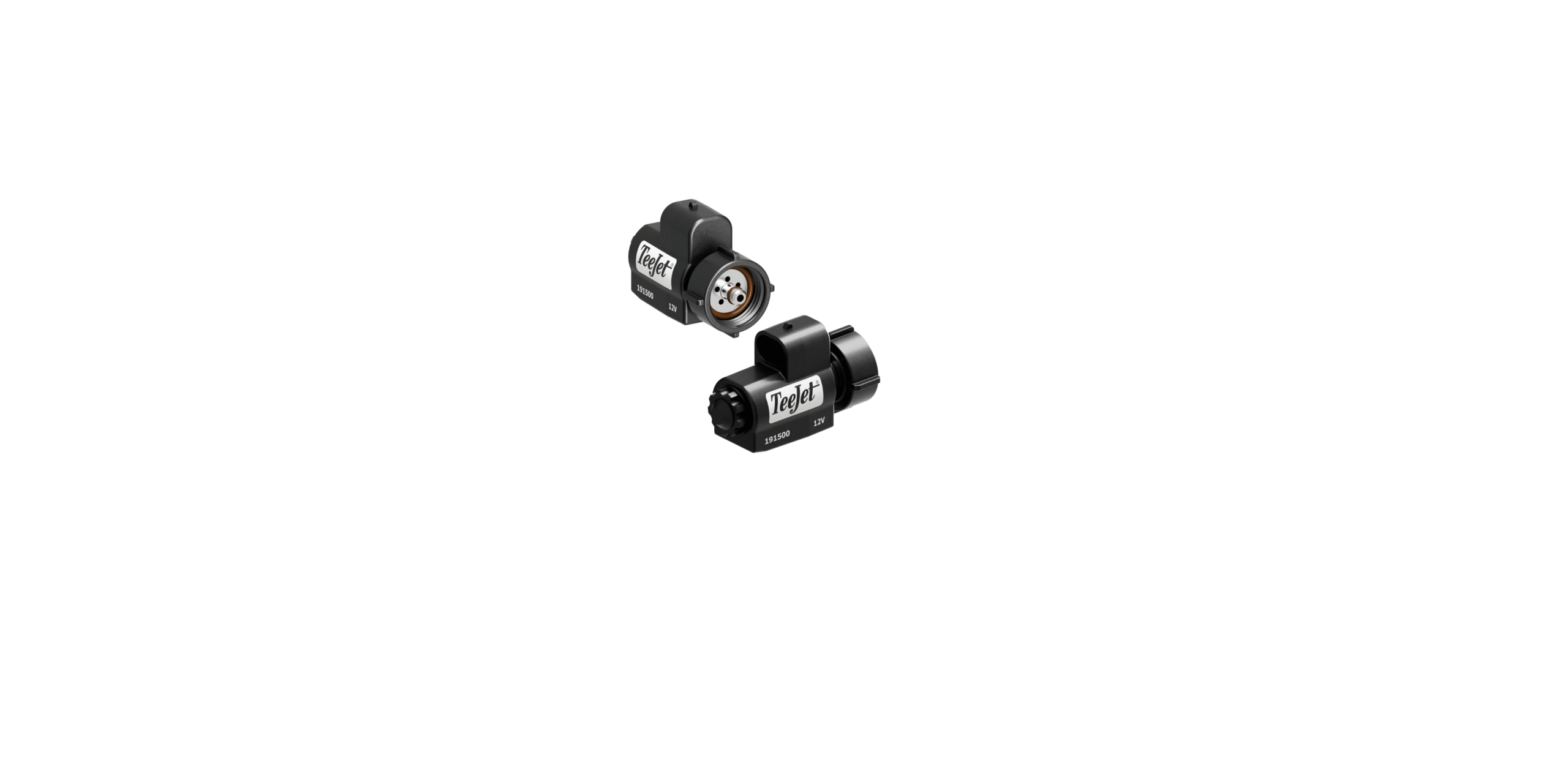

TeeJet TECHNOLOGIES 115880 DynaJet Valve

Safety information
- The DynaJet® valve, strainers, and spray boom are components in direct contact with chemicals.
- These chemicals can be corrosive and dangerous to the health of the operator.
- Before any intervention in the system, we recommend that you wear appropriate safety equipment.
- You should wear this safety equipment during any intervention of the DynaJet® valve, nozzle body, cables, strainers, spray boom, or any chemical-exposed area.
- This minimum safety equipment should be composed of:
- Long-sleeved chemical-resistant glove

- Full protective suit.

- Full protection screen for your eyes.

During the washing, rinsing, and inspection of the sprayer, the sprayer should be parked on a level surface. The sprayer should also be in an area where the water and chemical residue can be collected and treated appropriately. We do not recommend doing this procedure in the farm field.
Please note that before disassembly of any sprayer components, you must remove the pressure from the spray boom to avoid any projection of chemical onto yourself.
General Disassembly and Reassembly
- Loosen and remove the nylon Nut (1)
- Separate the Coil Assembly (2) from the rest of the Tube/Plunger Assembly (3-10)
- Remove the Locking Ring (10)
- Using pliers to grip the Interface Cap (7), loosen the Tube Sub-Assembly (3) using a 9/16” (14 mm) or adjustable wrench.
- All repairable parts should be accessible at this point.
- The Plunger Sub-Assembly (4), stainless steel Spring (5), and O-rings (6, 8, 9) can be cleaned or replaced without further disassembly.y
- During reassembly, place the Plunger Sub-Assembly (4) and Spring (5) in the Tube Sub-Assembly (3)
- While compressing the Spring (5), thread the Tube/Plunger Assembly (3-10) to the Interface Cap (7) and tighten using a wrench and pliers.
- Optional: Apply 1 drop of Loctite Blue 243 to the threads of the Interface Cap (7) and Tube Sub-Assembly (3)
- Torque Specifications: Tighten Interface Cap (7) & Tube Sub-Assembly (3) to 12 in-lbs (1.36 N-m). Return the Locking Ring (10) to its original position and slide the Tube/Plunger Assembly (3) through the Coil Assembly ( 2). Tighten the nylon Nut (1) to the Tube/Plunger Assembly (3-10)
- Recommended: At the time of installation, spray CorrosionX®, CorrosionX® Heavy Duty, or CorrosionX® Aviation corrosion prevention compound into the connector to wet the termini before plugging in the connector.
Proceduredure
- Fill the main tank with a minimum of 500 liters of clean water.
- Park the sprayer in a safe location where you can unfold the spray boom. Then, unfold the spray boom.
- Set the rate controller to automatic regulation.
- In the controller menu, set the working speed to 8 km/h.
- Enter a target rate between 100L/Ha and 180 L/Ha. Set the pressure to around 3 Bars.
- Turn on the sprayer pump.
- Turn on all section switches and the master switch.
- Spray water until all chemical is flushed from the spray boom.
- We recommend spraying for a minimum of 30 seconds.
- Turn off the master switch.
Cleaning
- When it is clean, reinstall it on the spray boom. In the case of very dirty strainers, remove the spray line strainers from the sprayer, place them into a solution of water and cleaning solution.’
- Let the strainers remain in the cleaning solution for one or two hours.
- Brush the strainers with a soft brush to eliminate the remaining particles.
- When the strainers are clean, reinstall the strainers on the spray boom.
Daily Maintenance
- We recommend that you rinse the system with clean water after each application. You can use the normal rinsing and washing program on your sprayer to achieve this task.
- If your sprayer doesn’t have any rinsing or washing programs, you can follow our rinsing procedure.
- We recommend spraying clean water through the DynaJet® valves for a minimum of 30 seconds to ensure that the valve is clean. This will ensure the longest lifetime of the valves.

Valve rinsing
- In the case of Liquid fertilizer application, we recommend you follow the same process described in the section “DynaJet® Valve washing and rinsing”.
- In addition to this, we recommend spraying the valves with water to remove any potential residue of liquid fertilizer remaining on the valves.
- The spraying of the valves doesn’t require high pressure; the normal pressure from the local water network is enough.
- Rinsing the outside of the valves will ensure that any remaining chemicals on the outside surface of the valves will be removed to avoid any chemical TeeJet TECHNOLOGIES 115880 DynaJet Valve attack from the outside.

inspection
- After rinsing, we recommend you pressurize the spray boom to see if any of the valves are leaking or dripping.
- If a valve is leaking or dripping, there may be some debris lodged in the sealing area, not allowing proper closing of the valve.
- If you detect a DynaJet® valve leaking after the washing and rinsing, we recommend running the washing and rinsing procedure mentioned above.
- In the case that you can’t remove the particles or debris from the valve with the washing and rinsing procedure, we recommend that you disassemble the clogged valve.
Weekly Maintenance
Spray boom strainer cleaning

- Your spray line strainers will protect the DynaJet® valves from any debris.
- We recommend you disassemble the strainers every week (when using the sprayer) to check the cleanliness of the strainers.
- If your strainers are dirty, you should clean them and remove all debris.

Annual Maintenance
- It is recommended that you winterize your TeeJet TECHNOLOGIES 115880 DynaJet Valve sprayer for the off-season.
- We recommend winterizing the DynaJet® valves.

- If you see a valve leaking during the inspection process, you should remove it from the spray boom and isolate it to follow the full procedure of disassembly and cleaning.
- When the spray boom is fully clean, we recommend removing all DynaJet® valves from the spray boom. You should disassemble the valves from the coil.

Winterizing the Sprayer
- The valves should be placed in a bucket filled with water and cleaning solution.
- You can let the valves remain in the bucket for 2-3 days and mix the valves to help the dirt be removed, and let them sit again for 2 days.
- After those two days, rinse the valve in clean water until the cleaning solution is removed.
- You can reassemble the valves and the coil together. Reinstall the DynaJet® valve on the sprayer and start your winterization procedure.
- It is not recommended to keep the DynaJet Valves in freezing temperatures.
- If your sprayer is located in such conditions, you MUST remove all of the DynaJet® Valves from your sprayer and keep them out of the freezing temperatures.
Customer Support
- Tel: (502) 912-0055
- Website: @teejet.com
FAQs
Q: What is the purpose of the TeeJet 115880 DynaJet Valve?
Ans: Part of the DynaJet® spray system, the DynaJet 115880 Valve is made to electronically regulate droplet size and nozzle pressure for precise spraying in agricultural applications.
Q: How often should the DynaJet valve be maintained?
Ans: Every 100 to 150 hours of usage, or more frequently in situations with high levels of dust, dirt, or debris, routine maintenance is advised. When performing routine sprayer maintenance, always look for wear or blockage.
Q: Can the valve be cleaned in the field?
Ans: Indeed. By taking the valve out of the nozzle body, cleaning it with clean water and a soft brush, and looking for obstructions or dirt, the valve can be field-serviced. Steer clear of strong chemicals unless TeeJet has given its approval.
Q: Can I disassemble the DynaJet valve for internal cleaning?
Ans: Yes, but only adhere to the guidelines set forth by the manufacturer. Because internal components are precisely tuned, improper disassembly could reduce valve function or void warranty.
Q: Should the valve be lubricated during reassembly?
Ans: If lubrication is necessary, only use lubricants that have been certified by TeeJet. Function may be hampered or contamination may result from overlubrication or improper lubricant use.
Q: What cleaning solutions are safe for the valve components?
Ans: Just use clean water and light soap. Steer clear of powerful acids or solvents. Use cleaning agents that TeeJet has approved for use on spray system components to remove tough deposits.
Q: Is there a recommended torque setting when reinstalling the valve?
Ans: Indeed. To prevent overtightening, which could harm threads or seals, consult the TeeJet product literature for the appropriate torque specifications.