

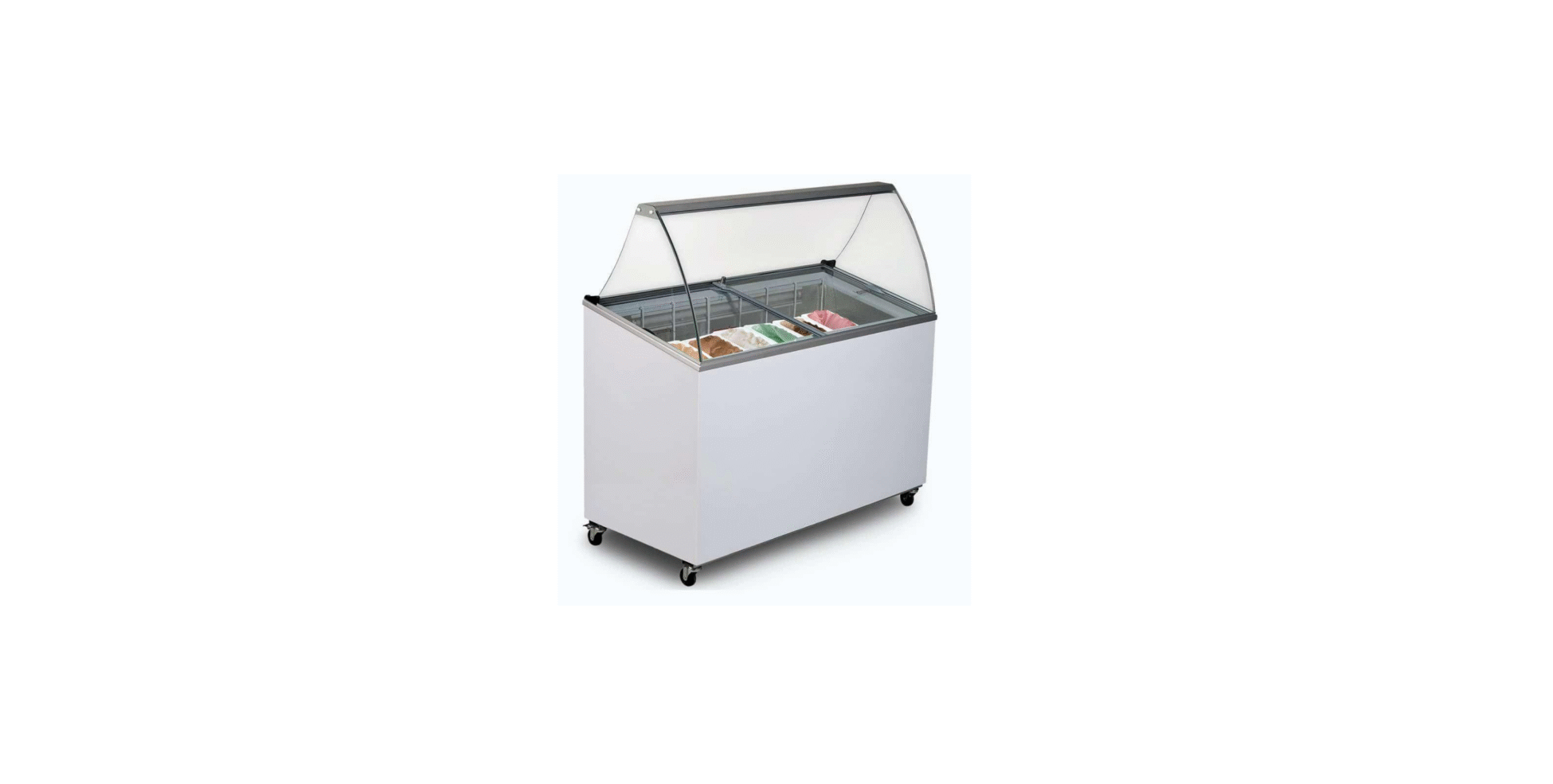

BROMIC 3735262-NR Chest Freezer

Introduction
This manual contains important information about the installation, operation, and maintenance of Bromic chest freezers. Please pay close attention to the important safety information shown throughout this instruction manual.
Safety Instructions
- Read all instructions before installing or using this appliance.
- Retain this manual for future reference.
- Use this appliance only as described in this manual. Any other use not recommended by the manufacturer may cause fire, electric shock, or injury.
- Improper installation, adjustment, or alteration and failure to follow the warnings and instructions in this manual could result in severe personal injury, death, or property damage.
- The manufacturer is not responsible for any damage that could happen from improper use.
- Inspect the appliance for damage regularly.
- Keep packaging material out of reach of children.
- Do not attempt to alter the appliance in any manner.
- Please pay attention to the maximum load limit when filling the baskets.
Overview
| Part Number | 3735262-NR | 3735301-NR | 3735302-NR | 3735303-NR | |
| External Dimension | Height, mm | 1296 | 949 | 949 | 949 |
| Width, mm | 1298 | 719 | 1010 | 1298 | |
| Depth, mm | 615 | 615 | 615 | 615 | |
| Capacity | Litres | 352 | 176 | 264 | 352 |
| Gross Weight | Kg | 146 | 57 | 70 | 81 |
| Temp. Range | Degree Celsius | -22 to -12°C | -22 to -12°C | -22 to -12°C | -22 to -12°C |
| Climate Class* | Class | 4 | 4 | 4 | 4 |
| Max Ambient | Temperature | 35 | 35 | 35 | 35 |
| Lid Type | Type | Slide | Slide | Slide | Slide |
| Lid Shape | Type | Flat | Curved | Curved | Curved |
| Safety Glass Lid | Type | Yes | Yes | Yes | Yes |
| Stainless Steel Lid | Type | NA | NA | NA | NA |
| Basket | Qty | 7 | 2 | 4 | 5 |
| Lockable Front Castor | Yes | Yes | Yes | Yes | |
| Refrigerant | R290 | R600a | R290 | R290 | |
| Refrigeration
Charge, g |
110 | 65 | 105 | 110 | |
| Plug Rating | 10A | 10A | 10A | 10A | |
| Extra Care Warranty Years | 2 | 2 | 2 | 2 | |
Installation
Locating the Cabinet
- Do not install the cabinet outdoors.
- Locate the appliance in a dry and well-ventilated place.
- The unit must be positioned on a level surface.
- Do not install in the vicinity of heating radiators or other heat sources.
- Do not install the appliance where it is exposed to direct sunlight.
- Do not install the appliance where it is exposed to warm draughts or open doors.
- Keep the ventilation grill free of obstructions.
- Adequate allowance should be made for door openings.

Ventilation
- Allow 150mm clearance between the walls, ceiling, and the appliance. This is essential for optimal performance and reliability.
Power Supply
- The appliance must not be plugged into a multiple-outlet power board.
- The appliance is supplied with a flexible power cord fitted with a 3-pin plug.
- The socket used must be properly earthed and fuse/RCD protected.
- Power cable should not be placed next to a heat source, such as a room heater or other electrical appliance.
- Do not turn off the power before consulting the person responsible.
- Mark the power source clearly, so the refrigerator is not unplugged or turned off accidentally.

Before Operating
- Avoid tilting or transporting the appliance in a horizontal position.
- Remove all the packaging material before using the appliance.
OPERATION
Start-up
- Connect the appliance to the mains power supply, and the appliance will start working without requiring further operation.
- The thermostat has been pre-set by the factory; there is no need to adjust unless requiring different internal temperature is required.
Using the controller
- For solid lid models (as per picture below), adjust the thermostat using the dial below to set the appliance’s internal temperature, moving counterclockwise to achieve a lower internal temperature.

- The green indicator (on selective models) indicates a valid power supply.
- The red indicator (on selective models) indicates an alarm condition when the internal temperature of the appliance is higher than normal.
- Depending on the situation, this can take up to 24 hours.
- The unit can have the internal temperature lowered by turning the dial clockwise.

Digital thermometer
- The digital thermometer measures and displays the internal temperature.
- To change the batteries, access the rear of the temperature display by removing two screwsfrom the base of the ventilated service panel on the left-hand side of the unit.

Storage
Start-up
- Clean the interior surface with a soft cloth and warm water before loading.
- Ensure there is free circulation of air between the products.
- Do not overstock the appliance.
- Keep refrigerator lid openings to a minimum.
- The maximum recommended shelf load (for each basket) is BROMIC 3735262-NR Chest Freezer specified in section 3 of this manual. Do not overstock.
Maintainance
- Plan your defrosting, preferably when there is no or limited stock in the freezer
- 4 hours before defrosting, activate Fast Freezing mode (refer to section 5 of this manual) to further freeze the food stock, getting them ready for temporary relocation.
- Disconnect the appliance from the power supply.
- Remove all frozen food and store it temporarily in another freezer or insulated container.
- Never use an electric heater, warm water, or hairdryers for defrosting.
- Locate the external drain plug, put a container with at least 1 litre capacity underneath the drain, ready to collect defrosted water. Pull
- The external drain plug halfway, rotate it until the water hole points downward to\ \the container.
- Pull out the internal drain plug to start draining defrosted water.
- Clean the interior with dry cloths.
- Plug the appliance back in to resume normal working BROMIC 3735262-NR Chest Freezer conditions.
Cleaning the Cabinet
- Remove the products and transfer to a suitable location prior to cleaning the inside of the cabinet.
- Do not use any aggressive or abrasive cleaning agents.
- Never use a water hose or a high-pressure jet to clean.
- Do not use sharp or pointed objects for cleaning.
- Clean the inside and outside of the appliance with a clean, damp cloth or with a neutral cleanser.
- Dry all surfaces with a dry cloth.
Defrosting
- A thick layer of ice built up may reduce the freezer’s cooling capacity and increase energy consumption.
- To ensure the correct operation of the appliance, we recommend defrosting at least twice a year.
- Follow the procedure below to defrost.
Replace the battery of the digital thermometer.
- Remove the thermometer gently using a flat-head screwdriver, remove the drained batteries located at the back of the thermometer, and replace them with nLR44-type batteries.
Troubleshooting
| Symptom | Possible Cause(s) | Solution |
| The unit does not work | A. No power supply | A. Check the power supply and the green indicator
B. Adjust the temperature control dial to a colder position |
| Internal
Temperature Too High |
A. Ambient temperature too high
B. Inadequate ventilation C. Wall clearances below minimum distance D. Incorrect dial position E. Ice build-up on internal walls |
A. Relocate unit
B. Keep ventilation slots free C. Adjust to minimum clearance D. Adjust temperature control dial. Defrost the appliance (refer to section 7) |
| Internal
Temperature Too Low |
A. Set the temperature too low | A. Adjust the temperature control dial |
| Odour inside the cabinet | A. Cabinet dirty | A. Clean |
| The lid is difficult to
open |
A. Normal
B. Hinge damage |
A. It is normal for the lid to be difficult to open just after you closed it
B. Inspect the hinge and call the service hotline |
| Noisy | A. Unlevel surface | A. Relocate unit |
| Thermometer LCD dim / off | A. Battery dead | A. Replace battery |
Diposal
The refrigerant used and contained within a hermetically tight circuit is environmentally friendly and does not contain chlorine and has zero ODP.
- Before disposal, render it unserviceable by disconnecting the power plug and severing the power cable.
- Consult your local authorities or authorised dealers for details of collection and disposal facilities.
- Children are often unable to recognise the dangers associated with commercial refrigeration equipment.
- The refrigerant used in all appliances covered by this manual is flammable.
Warranty
Warranty Terms vary across the range. Please ensure you are familiar with the Terms and Conditions that apply to the purchase of your Bromic product by referring to the Warranty Policy included with your purchased product.
Customer Support
North America
- Tel: (800) 301-1293
- Website: http://www.bromic.com
Australia
- Tel: 1300 276 642
- Website: http://www.bromic.com.au
Europe
- Tel: +31 737041029
- Website: http://www.bromic.co.uk